

What is Shallow copying in Salesforce?
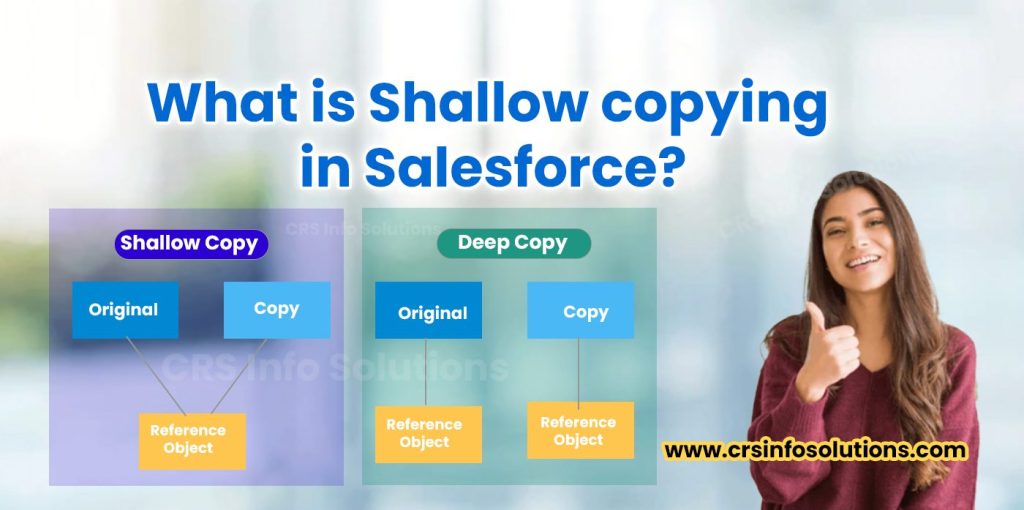
Table of Contents
Shallow copying in programming, particularly in the context of object-oriented languages like Java, refers to creating a new object which contains the references to the original object’s member variables. This means that the newly created object points to the same memory locations as the original object for its properties or elements.
Shallow copying in Salesforce
In Salesforce, shallow copying can be demonstrated using Apex, the programming language used for Salesforce development. Apex is strongly influenced by Java, so some of the concepts are similar.
In Salesforce, when you make a shallow copy of an object, you are essentially copying the reference to the object and not the object itself. This means if the original object is modified after the copy, those changes will also be reflected in the shallow copy.
Salesforce, as a leading CRM platform, plays a pivotal role in fulfilling this demand. Salesforce training in Noida provides a distinct edge due to the city’s vibrant job market. Major companies like Deloitte, Accenture, Infosys, TCS, and Capgemini are continuously seeking certified Salesforce experts. Enroll for free demo online today!
Here’s an example to illustrate shallow copying in Salesforce:
Example: Shallow Copy of a Custom Object
Assume we have a custom Salesforce object called Invoice__c with a related object InvoiceLineItem__c. We’ll create a shallow copy of an Invoice__c record.

Explanation of the Clone Method Parameters:
- The first parameter (
false) specifies that the method should not perform a deep clone. This means related objects (likeInvoiceLineItem__c) will not be cloned. - The second parameter (
true) ensures that the cloned object is editable. This is necessary because you want to insert it as a new record. - The third and fourth parameters are set to
false, indicating that the clone operation should not preserve the ID and should not preserve read-only timestamps, respectively.
This snippet will clone the Invoice__c record but not its associated InvoiceLineItem__c records. If you need to clone the line items as well (creating a deep copy), you would need additional logic to clone each related InvoiceLineItem__c object and associate them with the new Invoice__c record.
// Original custom object
Custom_Object__c originalObj = new Custom_Object__c();
originalObj.Name = 'Original Object';
originalObj.Custom_Field__c = 'Value';

// Shallow copy
Custom_Object__c shallowCopy = originalObj.clone(false, false, false, false);
shallowCopy.Name = 'Shallow Copy';

// Insert the shallow copy
insert shallowCopy;

System.debug('Original Object Name: ' + originalObj.Name);
System.debug('Shallow Copy Name: ' + shallowCopy.Name);
In this example, originalObj is the original custom object, and shallowCopy is the shallow copy. The clone method is used to create the shallow copy, with the first parameter set to false to indicate a shallow copy. Both objects are modified to have different names, and only the shallow copy is inserted into the database.
Why Shallow Copying?
Here’s a more detailed explanation:
- Reference Copying: When a shallow copy of an object is made, the memory address (reference) of each field in the original object is copied into the new object. The fields themselves are not duplicated.
- Effect on Mutable Objects: If the object has fields that are references to other objects (like arrays or objects of a class), both the original and the copied object will refer to the same memory locations for these fields. Thus, changes made to these fields through either the original or the copied object will be reflected in the other.
- Shallow Copy Techniques: In Java, shallow copying can be done using various methods, like using a copy constructor,
clone()method, or by copying fields manually. Theclone()method, if not overridden, typically performs a shallow copy. - Use Case: Shallow copying is fast and resource-efficient since it doesn’t duplicate actual data. It’s useful when you want to create a copy of an object but intend to share the same sub-objects between the original and the copy.
- Risks: The major risk involved with shallow copying is unintended modifications. Since the copied object shares the same references for its sub-objects, any changes to these shared parts will affect both objects, which might not be the intended behavior.
In Salesforce, especially in the context of SObjects (Salesforce Objects), it’s crucial to understand the difference between shallow and deep copies. Shallow copying is commonly used for creating new records based on existing ones, but it’s important to be mindful of the shared references, particularly with related lists and complex objects.
Frequently Asked Questions (FAQs)
What is the difference between shallow copy and deep copy in Salesforce Apex?
In Salesforce Apex, understanding the distinction between shallow and deep copying is crucial for effective data manipulation. A shallow copy creates a new instance of an object by copying the values of the object’s fields as they are at the moment of copying. However, it does not duplicate related objects; instead, the new object shares references to the same related objects as the original. This is often used when you need a duplicate record but do not require independent copies of its child records. On the other hand, a deep copy not only replicates the parent object but also all related objects, ensuring that the new object is completely independent of the original. This is essential when you need a full standalone copy of a record and its relations, such as duplicating a complex sales order with all its line items.
How can you perform a shallow copy of a Salesforce object with related records using Apex?
To perform a shallow copy of a Salesforce object in Apex, you can use the clone method provided by the sObject class. This method is designed to copy the fields of an object, and it allows you to specify whether you want to copy just the fields of the object itself (shallow copy) or include its related records (deep copy). For a shallow copy, you would call clone(false, true, false, false); on the object. This approach is suitable when you need a new object that mimics the original but without duplicating its related records. For example, cloning an account record without copying its associated contacts or opportunities. This method provides flexibility in handling Salesforce data, especially when working with complex object hierarchies where not every related record needs to be duplicated.
What are the implications of using shallow copy for cloning Salesforce records in terms of data integrity and relationships?
Using shallow copy to clone Salesforce records can have significant implications for data integrity and the management of record relationships. When you perform a shallow copy, only the primary object’s fields are duplicated, and all related records maintain their links to the original object. This method does not create new instances of related objects, which means any changes made to related objects will affect both the original and the cloned records. This can lead to data inconsistencies if not managed carefully. Additionally, because related records are not duplicated, using shallow copies can preserve database space and prevent the unnecessary proliferation of duplicate data. However, it’s essential to understand the relationships and dependencies between objects to ensure that cloning does not disrupt business logic or data integrity.
Master Salesforce in Noida: Advance Your Career with In-Demand Skills and Lucrative Opportunities
Salesforce has swiftly emerged as a critical skill for professionals in tech-centric cities like Noida. Known as one of India’s top IT hubs, Noida hosts numerous software companies that rely on Salesforce to manage customer relationships and streamline business processes. Building proficiency in Salesforce, particularly in roles like Salesforce Admin, Developer (Apex), Lightning, and Integration, can greatly boost your career prospects in Noida. The need for these specialized skills is growing rapidly, and the competitive salaries further add to their appeal.
Why Salesforce is a Must-Have Skill in Noida
Noida has positioned itself as a key player in India’s tech industry, attracting multinational corporations and creating an increasing demand for skilled professionals. Salesforce, as a leading CRM platform, plays a pivotal role in fulfilling this demand. Salesforce training in Noida provides a distinct edge due to the city’s vibrant job market. Major companies like Deloitte, Accenture, Infosys, TCS, and Capgemini are continuously seeking certified Salesforce experts. These firms rely on specialists in Salesforce modules like Admin, Developer (Apex), Lightning, and Integration to effectively manage and enhance their Salesforce platforms.
Certified Salesforce professionals are not only highly sought after but also enjoy competitive pay scales. In Noida, Salesforce developers and administrators earn some of the highest salaries in the tech field. This makes Salesforce expertise a valuable asset, opening doors to career advancement and financial rewards. Obtaining a Salesforce certification from a reputable training provider can significantly boost your employability and pave the way for career success.
Why CRS Info Solutions is the Top Choice for Salesforce Training in Noida
CRS Info Solutions stands out as a premier institute for Salesforce training in Noida, offering extensive courses in Admin, Developer, Integration, and Lightning Web Components (LWC). Their seasoned instructors deliver not only theoretical knowledge but also practical, hands-on training to prepare you for real-world challenges. CRS Info Solutions is dedicated to helping you become a certified Salesforce professional, empowering you to step into the workforce with confidence. With a practical teaching approach and a comprehensive curriculum, you’ll be fully prepared to meet the expectations of leading employers in Noida. Begin your Salesforce journey today.

