
What Is a Recommendation System?
Introduction to Recommendation Systems
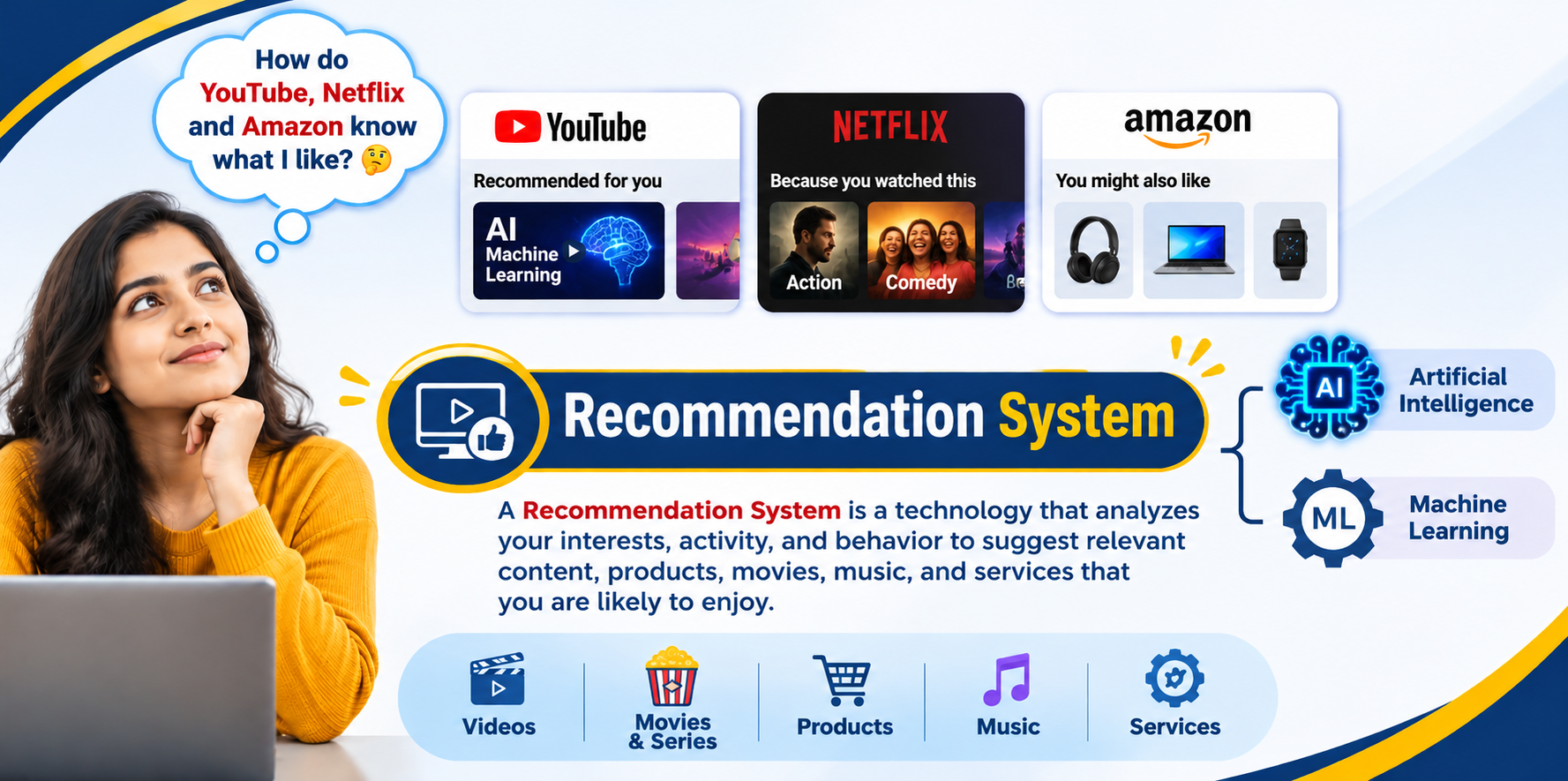
Have you ever noticed that when you watch a video on YouTube, the platform suggests more videos related to your interests? Similarly, when you watch movies on Netflix, it recommends other movies and series that you might enjoy. When you shop on Amazon, you may also notice product suggestions based on your previous searches and purchases. Have you ever wondered how these platforms understand your interests and decide what to recommend to you? The technology behind these personalized suggestions is called a Recommendation System. Recommendation Systems are an important application of Artificial Intelligence and Machine Learning that help digital platforms understand user preferences and suggest relevant content, products, movies, music, and services.
What Is a Recommendation System?
A Recommendation System is a technology that analyzes user preferences, interests, and behavior to suggest items that a user is likely to enjoy or find useful. These items can include YouTube videos, Netflix movies, Amazon products, Spotify songs, online courses, restaurants, and many other things. The main goal of a Recommendation System is to predict what a user might be interested in and provide personalized suggestions. Instead of showing the same content to everyone, these systems try to understand individual preferences and recommend different items to different users. For example, if two people use YouTube, one person may frequently watch Machine Learning and Artificial Intelligence videos, while another person may prefer cooking and travel videos. A Recommendation System can use their activity and interests to suggest different videos to each person.
AI Training in Hyderabad: Explore professional AI Training in Hyderabad with industry-experienced trainers, hands-on projects, and practical learning in Machine Learning, Generative AI, RAG, and AI Agents.
How Does a Recommendation System Work?
A Recommendation System works by collecting and analyzing information related to user activity and preferences. When you use a platform such as YouTube, Netflix, or Amazon, your interactions with the platform can provide useful signals about your interests. For example, the system may consider which videos you watch, which videos you click on, how long you watch them, what you search for, and which items you like or purchase. It uses these signals to identify patterns in your behavior and understand the type of content you may prefer. Machine Learning algorithms can analyze these patterns and predict which videos, movies, or products may be relevant to you. Based on these predictions, the platform generates personalized recommendations. As you continue using the platform and interacting with different items, the system can use your new activity to improve future recommendations.
Understanding Recommendation Systems with a YouTube Example
Let’s understand Recommendation Systems with a simple real-life example. Imagine that you frequently watch Artificial Intelligence, Machine Learning, and Python programming videos on YouTube. You also click on videos related to Generative AI and watch them for a longer duration. These activities provide signals about your interests. YouTube may use this information to identify that you are interested in technology and programming-related content. Based on these signals, it may recommend more videos about AI, Python, Machine Learning, and related topics. However, if another person frequently watches cricket highlights, movie trailers, and comedy videos, that person may receive completely different recommendations. This is how Recommendation Systems help platforms provide personalized content instead of showing identical recommendations to every user.
AI Training in Bangalore: Join AI Training in Bangalore to learn the latest Artificial Intelligence technologies, work on real-time projects, and develop practical skills for building AI applications.
Recommendation Systems in Netflix
Netflix is another popular example of a Recommendation System. Imagine that you frequently watch comedy movies and comedy web series on Netflix. The platform may identify your interest in comedy-related content and recommend other comedy movies or series that you might enjoy. Similarly, if you regularly watch action movies, thrillers, or science fiction content, Netflix may suggest more titles related to those interests. These recommendations can be influenced by your viewing activity, ratings, interactions, and patterns found among users with similar preferences. The purpose is to make it easier for users to discover content that matches their interests.
Recommendation Systems in Amazon
Recommendation Systems are also widely used in e-commerce platforms such as Amazon. Imagine that you search for laptops on Amazon and explore different laptop models. You may later notice recommendations for laptop accessories, computer bags, wireless mice, and keyboards. These suggestions may be based on your browsing activity, purchase history, product interactions, and patterns in the shopping behavior of other customers. By analyzing these signals, the Recommendation System can suggest products that may be useful or relevant to you. This helps customers discover products more easily and helps online shopping platforms provide a more personalized shopping experience.
Real-Life Example: Understanding a Recommendation System Through a Shopkeeper
Let’s understand this concept with a simple everyday example. Imagine that you regularly visit a grocery shop and frequently purchase biscuits. The shopkeeper observes your shopping habits and understands that you are interested in biscuits. Whenever a new variety of biscuits arrives at the shop, the shopkeeper may show it to you because they know you regularly purchase similar products. In the same way, a Recommendation System observes user activity, identifies interests, and suggests items that the user may like. The main difference is that a shopkeeper understands customer preferences through personal observation, whereas a Recommendation System uses data, algorithms, and Machine Learning techniques to identify patterns and generate recommendations.
Types of Recommendation Systems
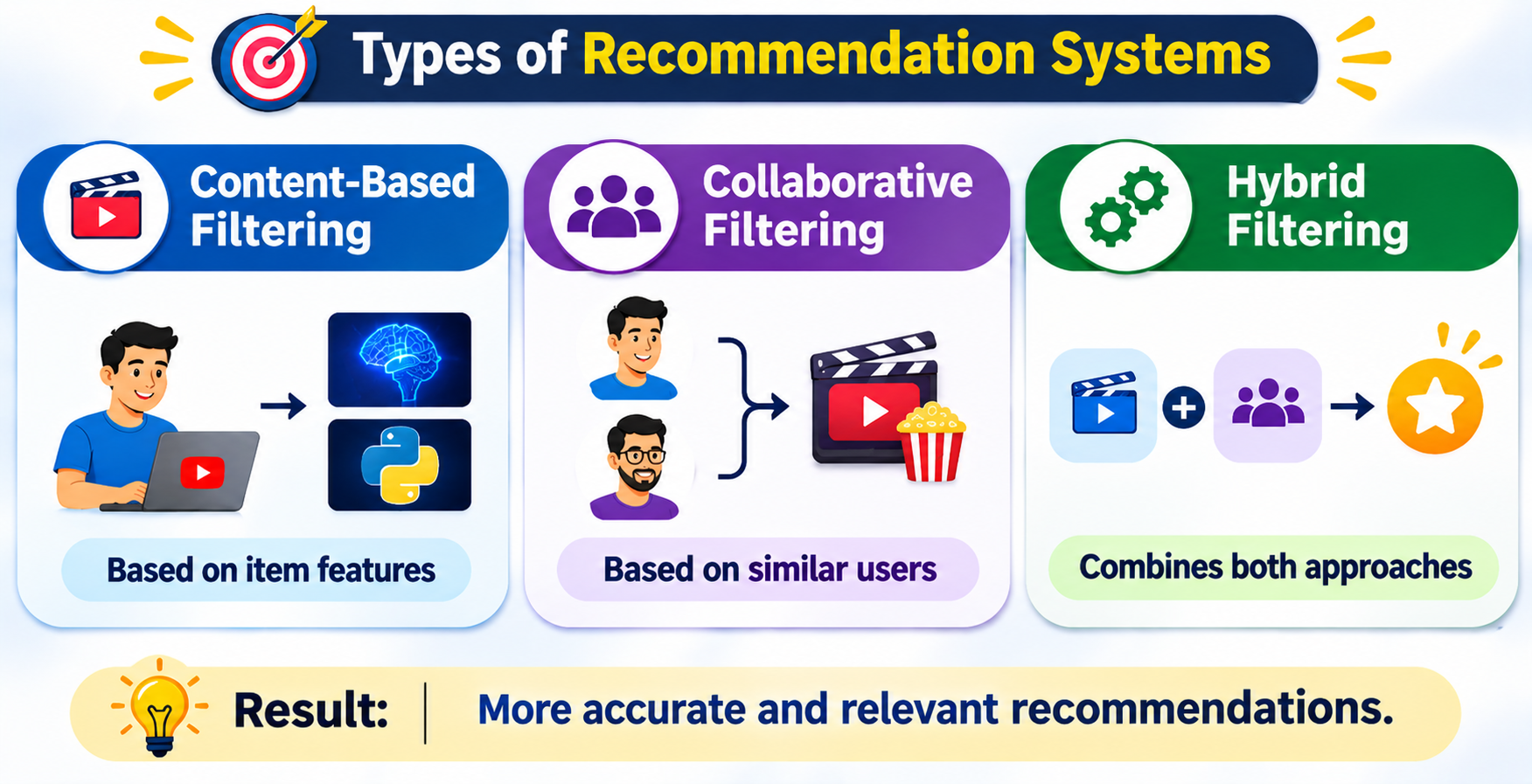
There are different approaches used to build Recommendation Systems. One common approach is Content-Based Filtering, which recommends items based on the features of items a user has previously liked or interacted with. For example, if you frequently watch Machine Learning videos, the system may recommend other videos related to Machine Learning because their content is similar to your previous interests. Another important approach is Collaborative Filtering. It recommends items by identifying users with similar interests or preferences. For example, if several users who enjoy the same movies as you also like a particular movie, the system may recommend that movie to you. Some modern Recommendation Systems also use Hybrid Filtering, which combines content-based and collaborative filtering approaches to generate recommendations using multiple sources of information.
Why Are Recommendation Systems Important?
Recommendation Systems play an important role in modern digital platforms because users are exposed to a huge amount of information, products, and content every day. Without personalized recommendations, users may find it difficult to discover content that matches their interests. Recommendation Systems help reduce this problem by analyzing user preferences and suggesting relevant items. They improve content discovery, provide personalized user experiences, and help users save time when searching for products, movies, videos, or music. For businesses, these systems can also help improve customer engagement, increase product discovery, and encourage users to spend more time exploring their platforms.
Conclusion
Recommendation Systems are an important application of Artificial Intelligence and Machine Learning that help digital platforms understand user interests and suggest relevant content or products. Whether you are watching videos on YouTube, exploring movies on Netflix, listening to music on Spotify, or shopping on Amazon, Recommendation Systems work behind the scenes to provide personalized suggestions. By analyzing user activity, preferences, and behavioral patterns, these systems predict what users may like and recommend relevant items. In simple words, the main job of a Recommendation System is to understand user interests and suggest things that users are more likely to enjoy. This is how Recommendation Systems make our digital experiences smarter and more personalized.
AI Training in India: Discover AI Training in India and gain industry-relevant skills in Python, Machine Learning, Deep Learning, Generative AI, and Agentic AI to build your future in the AI industry.

